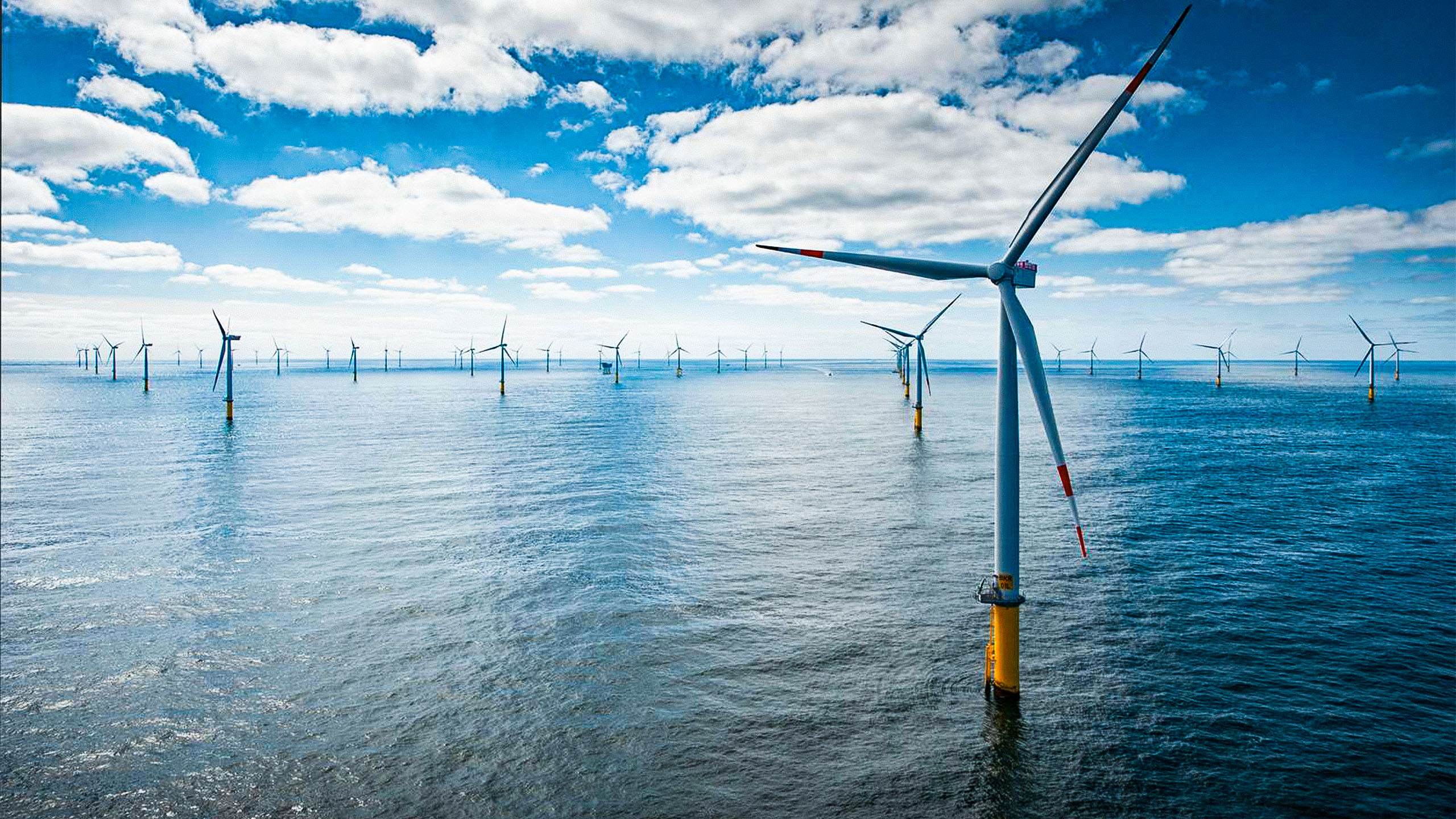
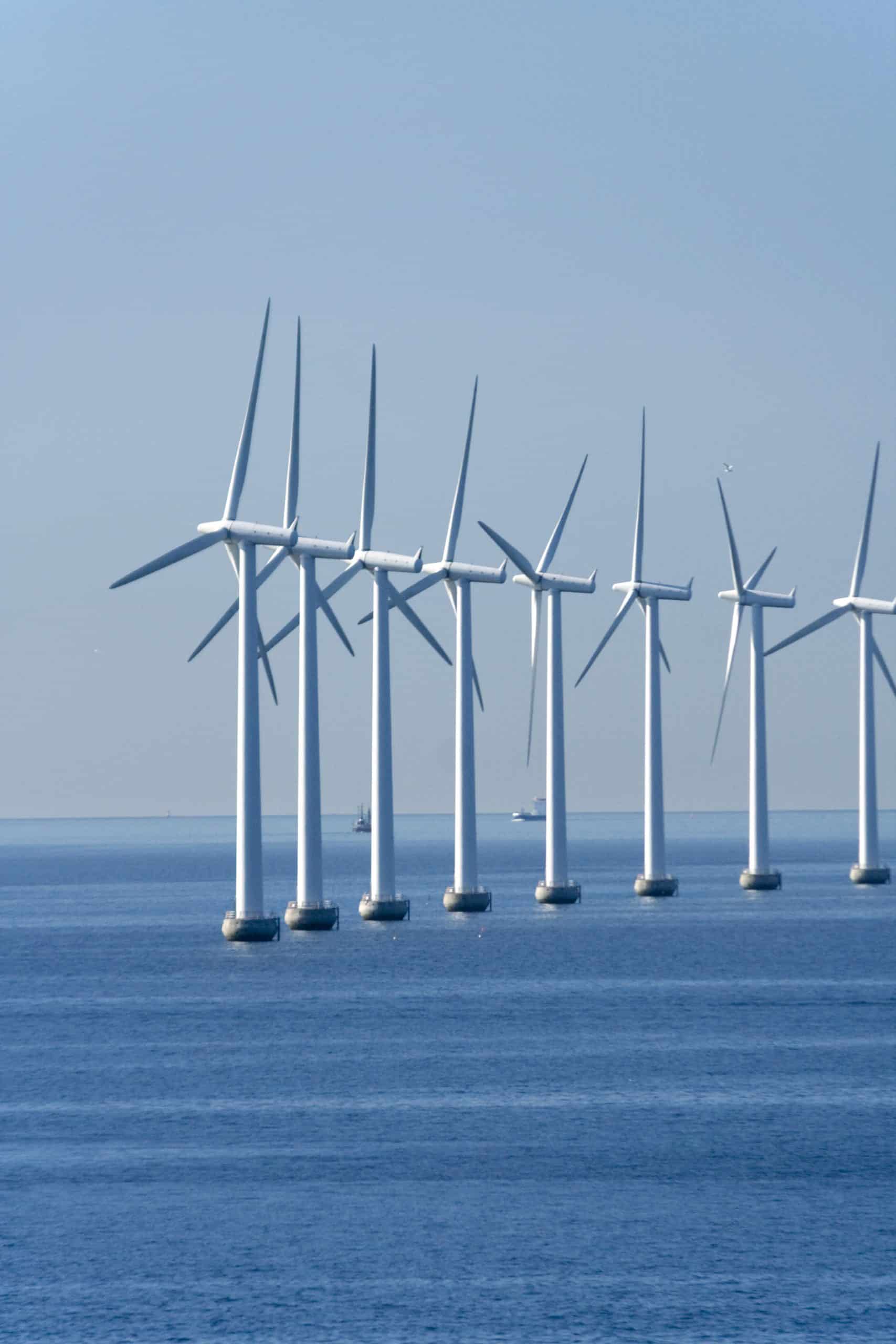
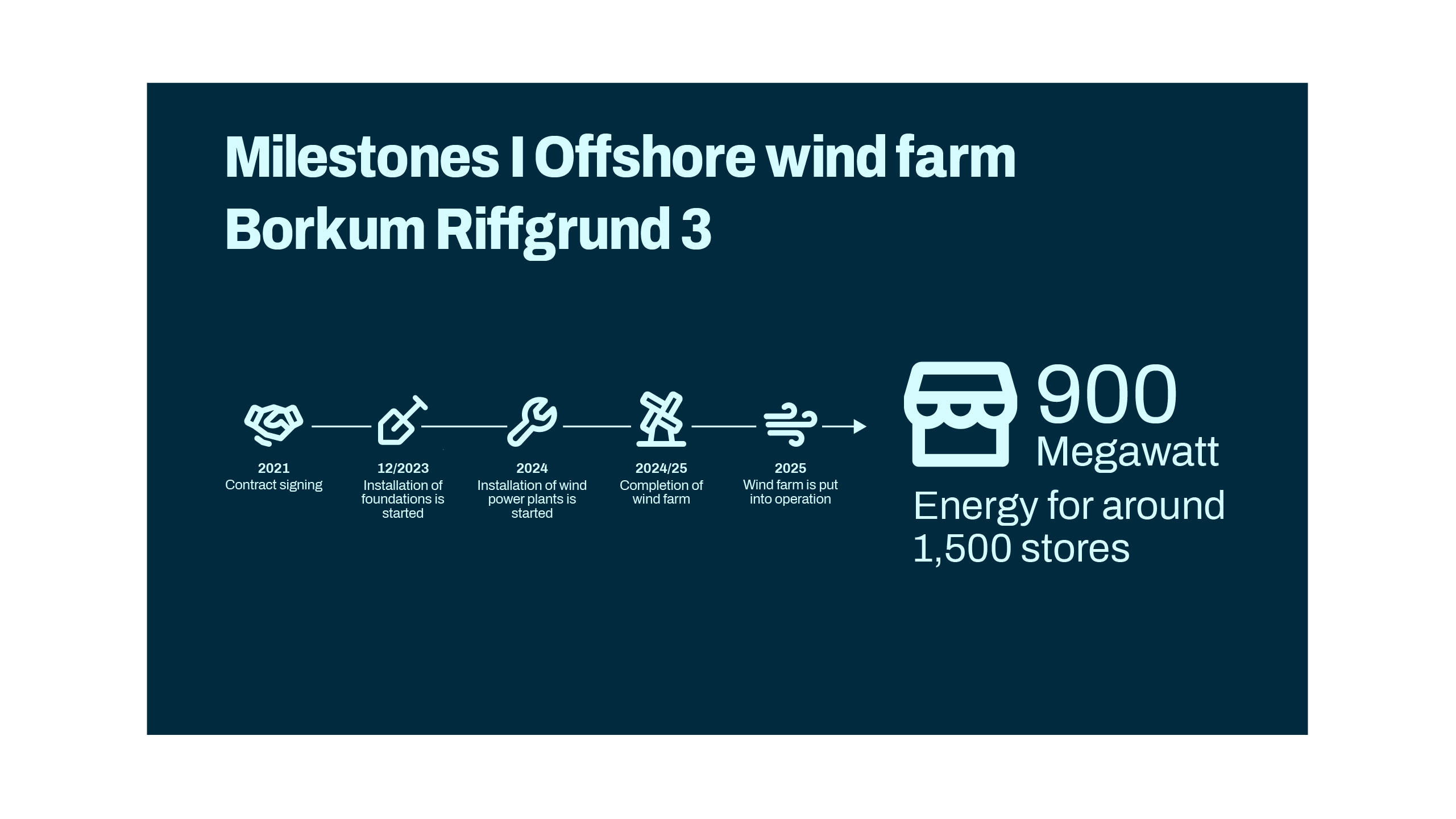
We are helping to shape the energy transition at both the regional and national levels. We will be the first food retailer in Germany to source renewable energy from a wind farm in the North Sea for REWE, PENNY, toom Baumarkt DIY store, and our Travel and Tourism division. Following extensive planning and preparation, construction has now begun on Ørsted’s new offshore wind farm, Borkum Riffgrund 3 (BKR03). In September 2021, EHA, the RWE Group’s central energy service provider, and Ørsted, the global market leader in offshore wind farms, signed the power purchase agreement—and now installation work on the 83 foundations in the North Sea has begun. With a rated capacity of 11 megawatts and a rotor diameter of 200 meters, these will be the largest turbines in the German North Sea. The wind farm is scheduled to begin operations in 2026. The new wind farm will have a total capacity of approximately 900 MW and will be built in the German North Sea near Ørsted’s existing Borkum Riffgrund 1 and 2 offshore wind farms. In the future, we will source electricity from the wind farm for approximately 1,500 stores. By purchasing electricity from the new facility, we are investing directly in the expansion of renewable energy—a major step toward achieving our climate goal.