They are sustainable, successful and crisis-resistant. And they are more popular than ever, even though many people don’t really know what a cooperative actually is. Expert Dr. Johannes Blome-Drees therefore calls for cooperatives to be part of the curriculum! A conversation about major social issues.
Cooperatives: Sustainability, success, crisis resilience
Interview with cooperative expert Dr. Johannes Blome-Drees
Reading time: 12 min.
Mr. Blome-Drees, we last spoke about cooperatives more than five years ago. A lot has certainly happened since then.
Johannes Blome-Drees: Around 40 percent of all the approximately 7,800 cooperatives that currently exist in Germany have been newly founded in the last two decades, and we have had over 900 new start-ups in the last three years alone. I am pleased that these cooperatives were not founded in traditional sectors, if you exclude the housing sector. New cooperatives are being founded primarily in the areas of regional development and local services of general interest, energy, health and social affairs as well as small and medium-sized business cooperatives.

About:
Dr. Johannes Blome-Drees
Lecturer in Cooperatives at the University of Cologne
Can you give us a few examples?
Johannes Blome-Drees: We are currently conducting case studies on Cologne start-ups from civil society, for example on a supermarket start-up called Köllektiv eG. There is now also a climate protection cooperative in Cologne called “heuteStadtmorgen eG”. Or a techno club called Krakeele eG. There are other exciting projects in the areas of community energy, community-supported agriculture, senior citizens’ cooperatives and platform cooperatives, which are often about cooperative business for the common good. A whole range of interesting business models have now also developed in the care sector.
Are there other areas of life where cooperatives are gaining ground?
Johannes Blome-Drees: There are numerous start-ups in new fields of activity: in the leisure sector, in education, in the cultural sector or in the mobility sector. One student is currently writing a bachelor’s thesis on mobility cooperatives.
Are these, to put it casually, car pools?
Johannes Blome-Drees: This starts with car sharing projects run by energy cooperatives. But there are also mobility cooperatives by and for students or community buses. We are talking about infrastructure cooperatives that serve to maintain and control existing private and municipal structures.
Anywhere a private service is cut back or a municipal service can no longer be provided, people come together to maintain these services.
How do you explain this development? Do crisis phenomena favor the emergence of cooperatives?
Johannes Blome-Drees: Cooperatives have always been crisis winners. If we look at the founding of industrial-era cooperatives, it was the social issue that drove the pioneers. That was indeed an innovation. Today, we are in a constant crisis mode. In this respect, it is not surprising that other management principles are being considered alongside the state and the market. And then you come to the cooperative with its principle of voluntary agreement.
The cooperative is a consumer economy. It supports its members through real, natural benefits of cooperative business operations. This is the hallmark of the cooperative principle of promotion.
Why should founders choose the legal form of a cooperative?
Johannes Blome-Drees: First of all, the cooperative is the only purpose-driven legal form in German company law. The idea behind it is needs-oriented and not profit-oriented. Cooperatives are democratically constituted economies of need. We know that founders choose cooperatives because they want to operate democratically. Cooperatives are opportunities for those who participate. They only work if people participate in the cooperative. At least three people are needed to set up a cooperative. They need the will and willingness to work together in a democratic way. It is a matter of direct performance-based promotion. And personal liability is limited to the capital paid in. Cooperatives are not about self-interest before the common good, nor about the common good before self-interest. It is about self-interest in the common good. Cooperatives are benefit cooperatives and not redistribution cooperatives.
Are cooperatives more sustainable than other forms of business?
Johannes Blome-Drees: I am firmly convinced that the cooperative legal and economic form is predestined to operate sustainably. This can be seen from the fact that cooperatives are super-generative. They are passed on from generation to generation. The cooperatives of the industrial era, if they still exist today, are over 175 years old and are a very strong indication of economically sustainable business practices. When you join the cooperative, you pay in nominal capital. When you leave, you get back the capital you paid in. What is earned during this time remains in the cooperative. Cooperative reserves form a kind of endowment capital for future generations of members. There is also a cultural core that has not changed to this day: Democracy, solidarity, subsidiarity, people orientation, altruism. Not-for-profit means that the cooperative does not focus on its own interests, but on the interests of its members. However, cooperatives are not sustainable or charitable per se. We need people in cooperatives who implement these ideas, take them seriously and charge them with meaning.
Cooperatives are small answers to big social questions.
What role do cooperatives play in promoting local economies and social justice?
Johannes Blome-Drees: Cooperatives enable their members to take responsibility for their own actions locally. They are local and regional nuclei with which economic, social and ecological crises, which often have their causes in large-scale or even global developments and contexts, can be countered. Cooperatives are small answers to big social questions.
Do you see any differences for employees depending on whether they work in a cooperative like REWE or in a stock corporation?
Johannes Blome-Drees: I don’t see any difference. There may be differences, but they do not derive from the cooperative. Exceptions are productive cooperatives where the employees are also owners.
How can cooperatives compete with capital-oriented companies?
Johannes Blome-Drees: The century-long success of cooperatives is based on the fact that they are people-oriented and not capital-oriented. Cooperatives draw their strength from locality and direct experience. They are founded in very specific circumstances to meet the very specific needs of their members. Of course, we also have large, international players, but most cooperatives have regional and local business districts in which they operate for their members. That makes them strong.
Do you see advantages for cooperatively structured trading companies compared to other forms, such as the AG?
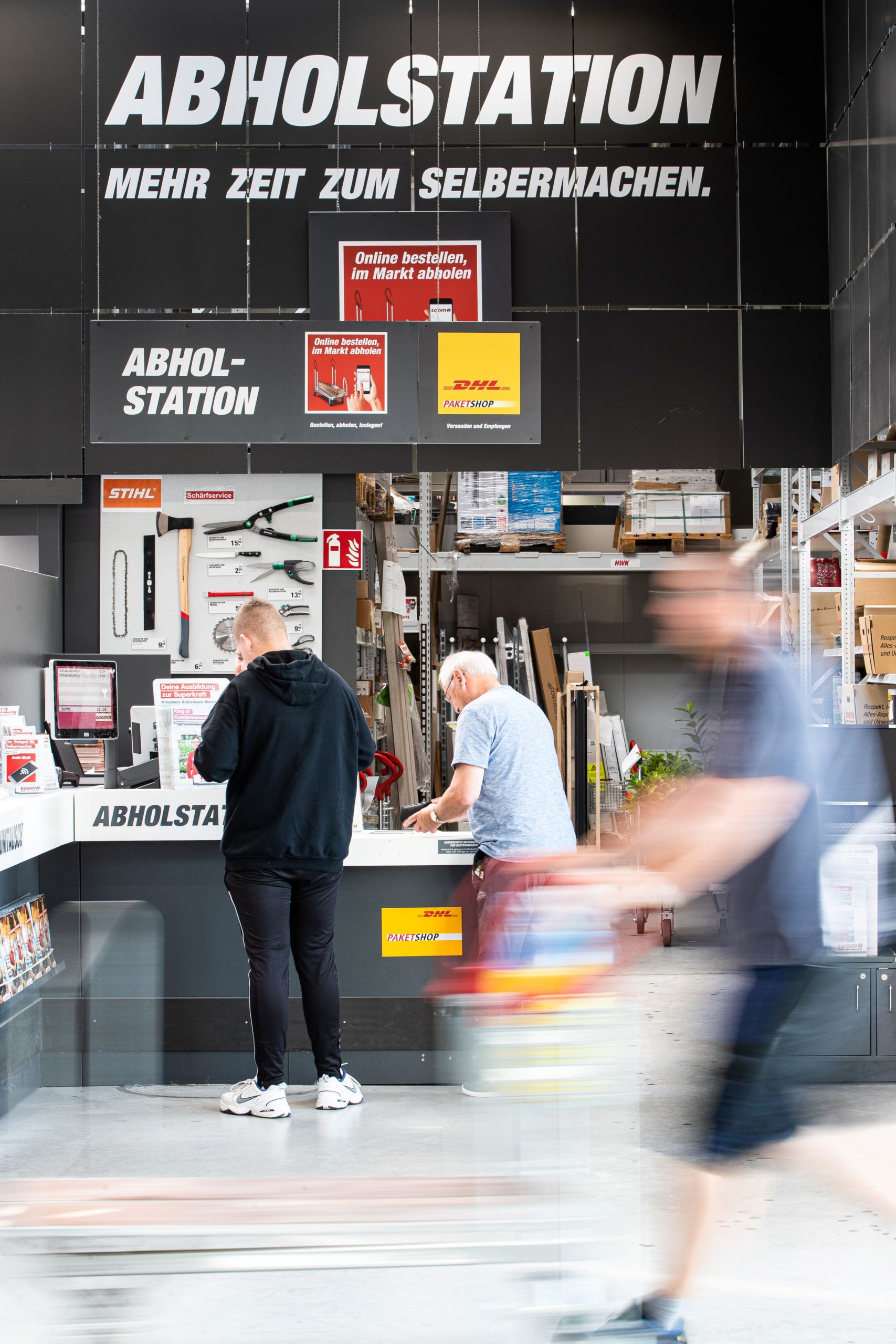
Johannes Blome-Drees: I actually believe that what makes cooperatives like REWE and Edeka strong is their hybridity. They combine two seemingly incompatible characteristics: size and smallness. Cooperatives are self-help organizations with established business operations. Central Business Administration functions are transferred from the member companies to a jointly established business operation, while the members operate independently on site. This independence is a major advantage. Only the members can decide locally what is best to do.
Cooperatives combine economic and sustainable action like no other type of company. Sustainability is part of the cooperative DNA.
How does the management of a cooperative manage to keep the enthusiasm of its members alive?
Johannes Blome-Drees: Cooperative entrepreneurship is characterized by the fact that there are people who are convinced of the cooperative idea and who take this as the benchmark for their entrepreneurial activities. Cooperative management is joint, economically sustainable management, which can be seen very clearly from the lowest insolvency rate by far in Germany. There are many reasons for this: the cooperation within the cooperative economy, the advisory and support services provided by the cooperative associations, especially in the start-up sector. There may be fewer start-ups. But those that are founded have undergone a foundation audit.
Would you say that cooperatives are a trend among young people?
Johannes Blome-Drees: I wouldn’t say that in general. But we have a large influx of students here at the university, which is much greater than in the past. There is a great deal of interest in an alternative way of doing business.
Cooperatives are schools of democracy, as all members have an equal say in fundamental decisions.
FC St. Pauli and Schalke have founded cooperatives, breaking new ground in professional soccer. What do you think of the idea of turning club members into cooperatives?
Johannes Blome-Drees: The cooperative is participatory, it is democratic, it is transparent in terms of capital injection, and it is independent. At Schalke, only club members can become members. At Sankt Pauli, they have opened it up to everyone. These members are supposed to have a stake in the stadium, and they are promised a payout. But they are also talking about an emotional return, which should be the focus of the Football Cooperative Sankt Pauli: Together with you, we want to show that different financing is possible – for you and for us. For everyone who believes in a different kind of soccer. At Schalke, this form of financing via the members serves to reduce debt.
With regard to federal policy: What wishes do you have for the new federal government? In your opinion, which framework conditions need to be adapted or changed in the interests of cooperatives?
Johannes Blome-Drees: Cooperatives don’t want to be advantaged, but they don’t want to be disadvantaged either. If you think about start-up financing, for example, you realize that the public funding programs are unsuitable for cooperative start-ups. Start-up financing is something that really needs to be improved. Another point is the knowledge problem in society. Many people think cooperatives are good, but they don’t know what cooperatives are. And many founders are also unaware of this legal form, as are start-up consultants, the liberal professions, lawyers, auditors, tax consultants and management consultants. We need to start in the education sector, especially at universities. Lawyers also complain about this. Outside the associations, there are only a handful of lawyers in Germany who really deal with cooperatives.
Cooperatives for a better world
One billion people worldwide are members of cooperatives.
In Germany, 22 million people are members of cooperatives, the majority in cooperative banks.
Cooperatives provide secure jobs for over 100 million people.
The United Nations has proclaimed 2025 as the International Year of Cooperatives. The aim is to draw attention to the global importance of cooperatives for achieving the 17 Sustainable Development Goals of the global community. Under the motto “Cooperatives Build a Better World”, the aim is to highlight the importance of cooperatives for economic and social development in countries. According to the UN, there are around one billion cooperative members in over 100 countries. In his welcome address to the international cooperative community, UN Secretary-General António Guterres emphasized: “”Cooperatives are the solution to many of the global challenges of our time. They make a decisive contribution to achieving the sustainable development goals of the global community. They promote regional entrepreneurship, provide access to markets and combat poverty and social exclusion worldwide. Cooperatives are shaping a better world.”