Extreme weather events such as floods, water shortages and severe storms are no longer a rarity. On the contrary, they pose a growing threat, which is further exacerbated by the ongoing climate crisis.
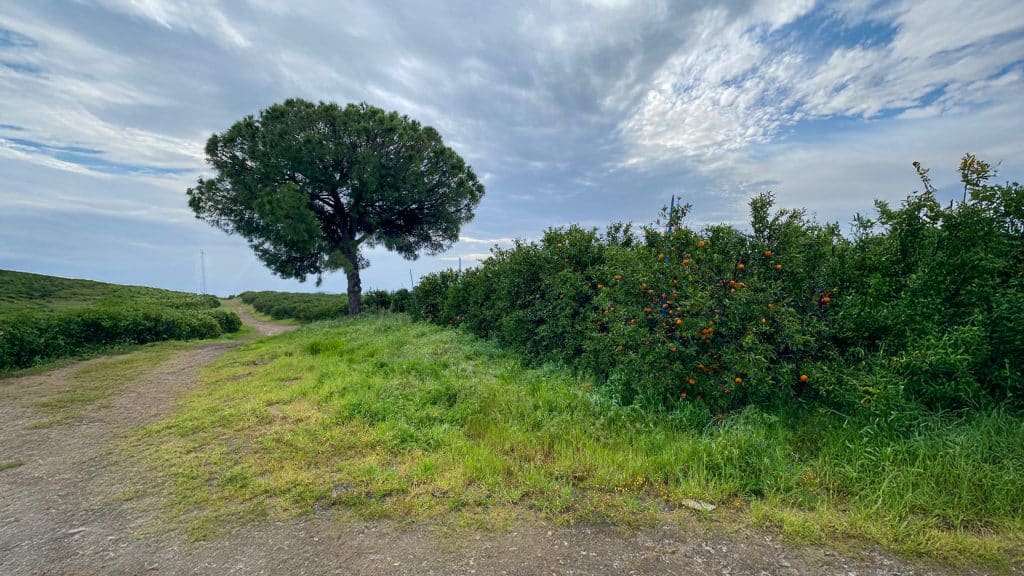
REWE GROUP promotes secure supply chains
TRES producer program
Reading time: 7 min.
A particularly striking example of this development is the devastating flood in Valencia in 2024, which not only hit local people hard, but also caused significant damage to the region’s infrastructure and fertile farmland. Such events can seriously jeopardize the stability of supply chains and pose enormous challenges for producers, as it often takes several years to cope with crop failures and financial losses.
The REWE GROUP is also affected by such extreme weather events. Around 20 percent of its fruit and vegetable requirements are sourced from Spain, meaning that large-scale crop failures can quickly lead to shortages of fruit and vegetables. To counter these challenges, Eurogroup, a subsidiary of REWE GROUP, which is responsible for purchasing fruit and vegetables in Spain, among other things, has launched the TRES producer program. The program, which was launched in Valencia in 2020 with four citrus fruit producers, aims to promote the exchange of knowledge and cooperative collaboration with suppliers along the supply chain. This not only supports the development of versatile and sustainable supply chains, but also actively strengthens security of supply.
In Spain, we are confronted with increasingly demanding legal requirements and extreme climatic conditions. With TRES, we want to help our producers to overcome these challenges and thus secure REWE’s supply,
explains Rafael Navarro, Head of Quality Management at Eurogroup Spain.
About:
Rafael Navarro
Head of Quality Management at Eurogroup Spain
Open communication and training for innovative agriculture
The TRES producer program is based on five pillars: Biodiversity, fertilization, crop protection, water and energy, and social responsibility. The program’s approach therefore goes beyond pure climate aspects and is deliberately holistic, so that the respective pillars are not considered in isolation. For example, the installation of bird boxes contributes to the promotion of biodiversity. In a next step, however, it also enables a reduced use of pesticides, as the birds support biological pest control and thus maintain the ecological balance.
Another central component of the program is the creation of an interactive communication platform. Within this framework, producers can regularly take part in training sessions and discuss current challenges. In addition to the producers, agricultural engineers and employees from Eurogroup Spain are also present. Rafael Navarro explains: The producers have a wide variety of concerns. We strive to support them, find suitable experts for the various challenges and offer individual solutions.
In the beginning, however, some producers were skeptical about this format, as they feared that their own ideas could be copied by the competition. However, the initial success of the program overcame these concerns. Today, the combined knowledge of all participants, monitoring of pests and beneficial organisms and regular data collection on productivity and water use enable the joint development of practical solutions.
This progress was already evident during the flood disaster in Valencia. Through targeted soil adaptation techniques, for example, water infiltration was improved, allowing water masses to be better controlled and greater damage to be prevented.
For other extreme weather situations, too, producers are better prepared thanks to the TRES program. For example, proven filtering techniques promote water storage in the soil during drought, while increased greening minimizes evaporation. Although many of these techniques are not new, the program combines them in innovative ways to achieve maximum efficiency and resilience.
Measurable success and initial expansions
The success of the TRES producer program can also be seen in the numbers: Within the first three years, all participating producers achieved at least 60 percent of the targets set.
Rafael Navarro summarizes: Positive progress can be seen in all five pillars of the programme.
Improvements were achieved particularly in the areas of “fertilization” and “plant protection” through the use of organic substances and optimized fertilization techniques. This in turn led to a reduction in the CO2 footprint. In addition, the modernization of machinery helped to reduce energy consumption in production. And in the area of “biodiversity”, measures such as the installation of bat boxes and insect hotels also increased the effectiveness of pest monitoring and ecological structures.
Eurogroup has now successfully expanded the program beyond Valencia to Catalunya and Murcia. The focus has been expanded from citrus fruits in Valencia to leafy vegetables in Murcia and stone fruit in Catalunya, Murcia and Valencia. By 2028, the program should be applicable to every fruit and vegetable product group. In the coming months, the program will be expanded to include the production of berries in Huelva and melons, watermelons and fruit vegetables in Almeria. In the area of social responsibility, the aim is also to involve producers in effective and accessible complaints mechanisms, such as Appellando.
It is therefore clear that the TRES program not only emphasizes quality, but also careful supplier management and Sustainability as central elements. It shows how REWE GROUP continuously strives to meet the highest product standards without neglecting social and environmental responsibility. This steady progress makes the program a pioneering model in the agricultural industry and makes a significant contribution to shaping the sustainability of agriculture in the future.