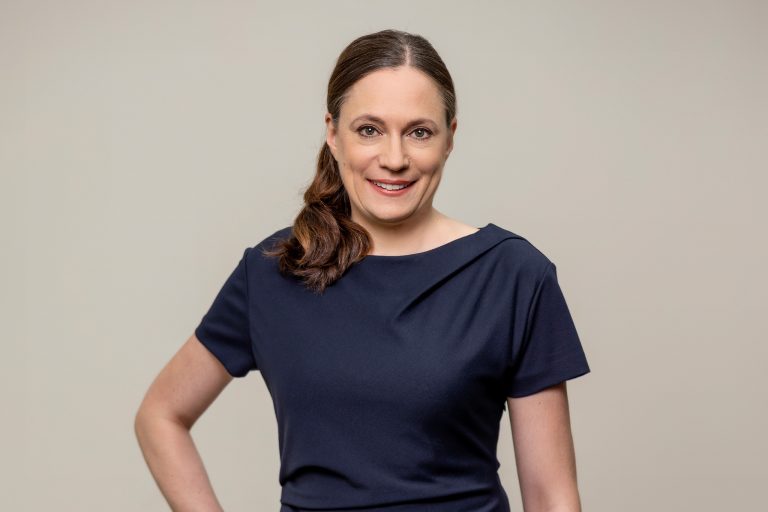
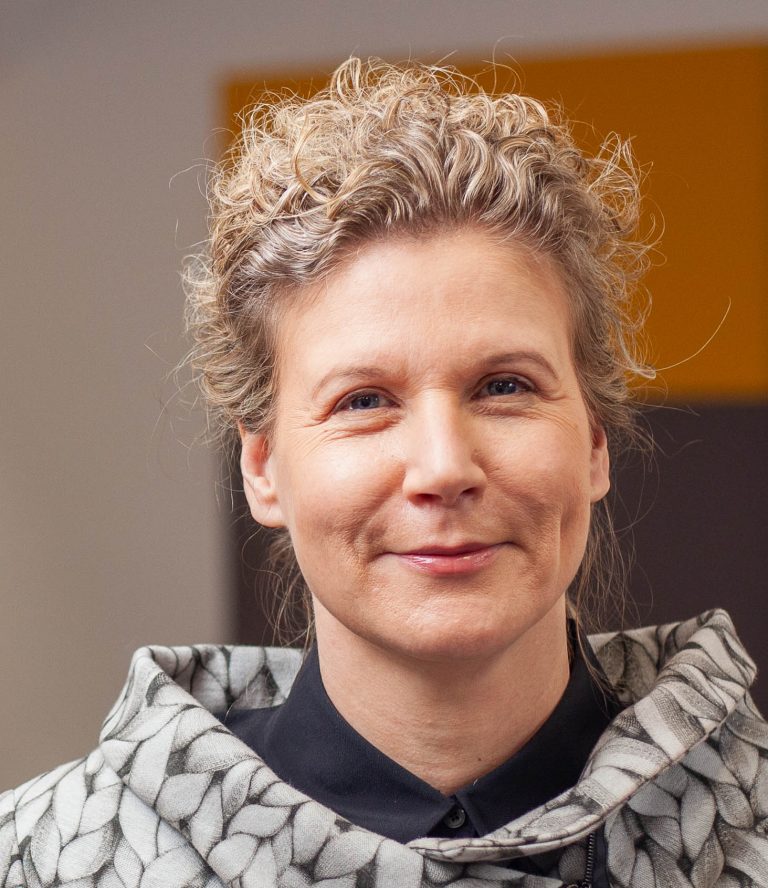
REWE Group wants to increase the proportion of women in management positions. How can this be achieved – and what political steps are needed to achieve greater equality? Dr. Daniela Büchel, Divisional Director Retail Germany Human Resources and Sustainability, and Vivien Schmitt, Head of Executive HR, on working in the post-crisis era, untapped potential and the question of when women should fly the flag.

Remote work, homeschooling and housework: the coronavirus pandemic has increased the burden on many working women in particular. In a recent study, the German Institute for Economic Research (DIW) found that the pandemic is reinforcing the traditional distribution of roles. To what extent do you see these effects at REWE Group – and what can we do to cushion this additional burden?
Daniela Büchel: The coronavirus pandemic is currently presenting families with major challenges. Women in particular are doing a lot of the family work. At REWE Group, I don’t currently see women having to reduce their working hours, for example, as is often reported in the media, in order to meet the certainly increased demands of family work.
I think we offer many opportunities to cushion these additional burdens, for example through flexible working hours or the option of remote work. But yes, we need to keep a close eye on how things develop after the pandemic.
Vivien Schmitt: Families are experiencing an insane amount of stress, which should also be better absorbed politically in a functioning education system. Anyone who has not clarified the distribution of new burdens at home will experience this discussion even more intensively. We should continue to make good offers for reconciling work and family life and find individual solutions together in the current situation, such as defined core hours of availability or simply good flexible solutions that are agreed together in the team.
Of course, this requires senior managers to understand and comprehend the dilemma in which employees find themselves. And this requires proximity and communication between senior managers and their employees.
If you want to have a career, you often have to be present. This is only possible to a very limited extent in these times. A disadvantage for women?
Daniela Büchel: We are currently in an exceptional situation. The same conditions apply to everyone here. Everyone is working predominantly remotely and meetings are taking place almost exclusively digitally. The question will be: How will we work when presence is possible again and we want to maintain mobile working on an equal footing? We need good solutions for hybrid meetings so that participants from the mobile office are not second-class participants. We have to be very careful that we take advantage of the opportunities that – sad as it is – corona of all things has opened up for us.
We want to move away from a culture of pure presence and enable equal working from remote work. We need to ensure that mobile working can be a way for everyone to achieve a better work-life balance even after the coronavirus pandemic.
Good technical solutions alone..
Vivien Schmitt: …will not be enough. We also need a cultural change. If senior managers don’t change their attitude, even the best technology will be useless. Because then many will demand: back to the office! It is crucial that senior managers internalize that they trust their employees beyond the crisis instead of controlling too much. And it is becoming more important to communicate to each individual in the team what their contribution is to the company. What benefit does everyone in their role, every team, bring to the organization? How do we measure our success? This has become even more important for motivation and orientation in the team, especially in virtual collaboration.
Daniela Büchel: We want to promote a culture in which results count, regardless of whether they were achieved in the office or at home. In addition to trust on the part of senior managers, this also requires a great deal of transparency on the part of employees. It must be clear what they are currently working on and when they are available. We need to create binding rules.
REWE Group has set itself the goal of increasing the proportion of women in the top three management levels to 20 percent by 2023. How can this be achieved?
Daniela Büchel: We have huge potential. Across all management levels, the proportion of women at our company is already around 50 percent. But the further up you look, the less women are represented. We have to change this – not by bringing women into top positions from outside, but by bringing our own female candidates into management positions. To this end, we have launched a number of programs and initiatives.
For example, there is our development and mentoring program “Women’s Drive” to actively strengthen women in their leadership role, or the women’s network “f.ernetzt”, in which around 260 female colleagues are now involved. REWE was also the first company to be certified according to the “audit job and family”. Within this framework, there are offers such as mobile working, part-time management and job-sharing management. Now we have to ensure that these comprehensive offers are also used. And, as I said, male senior managers also have an important role to play here.
Vivien Schmitt: We have to keep at it, which means specifically asking for high-potential female employees at potential conferences and asking for possible female candidates when making appointments. It can only succeed through perseverance. And you need role models who provide encouragement – such as the first female regional manager at PENNY. I see this as a strong, visible signal to the organization. But it takes courageous decision-makers and courageous women who are willing to take on more responsibility.
Store employees naturally have to be present on site. Flexible working hours, part-time management – does this also work in the stores?
Daniela Büchel: There are of course other challenges here. There is no one-size-fits-all model, but there are many individual options and measures. Almost three quarters of our colleagues in the store are women, many of whom work part-time. Every day, they juggle the checkout with childcare, the fresh food counter and caring for relatives. Here, too, we have developed many measures with the “job and family audit”. Some female store managers at REWE and some female district managers at PENNY are pioneers in part-time management.
Do women often hesitate when it comes to raising a finger for a management position?
Vivien Schmitt: In my experience, women weigh things up more carefully than men. They read a job advertisement and check very carefully whether they actually fulfill all the required criteria instead of saying: This job appeals to me, I’ll throw my hat in the ring. And they hesitate because they ask themselves how they will manage the new role, family and, if necessary, childcare. That’s why women need supporters and encouragers who trust them to take on a management role and specifically encourage them to pursue a career.
This encouragement is important, especially from male senior managers. And, of course, appropriate individual models are also needed to reconcile private and professional life. REWE offers the framework for this, but employees and senior managers should design it together according to the situation.
In other words, a quota for women, such as the one the German government has now set for Management Boards, will be of little use if a cultural change does not take place in the company at the same time?
Vivien Schmitt: A binding rule ensures that more women join Management Boards and Supervisory Boards and that women follow suit. That is positive. But just setting a quota is not enough in my view. I would like politicians to be more specific. This is also happening in climate policy, for example by naming precise measures to achieve certain goals.
Why are more women in management better for REWE Group?
Daniela Büchel: Apart from the fact that diversity and equal rights are values that we stand for as a company, this is also simply an economic necessity: we already have many female colleagues in the company – 67 percent in the entire REWE Group. We should definitely make use of this potential.
Vivien Schmitt: Another important argument in favor of more women in management: We believe that diversity helps us move forward, that it improves the quality of work when men and women work side by side in management positions on an equal footing and incorporate their different approaches. Studies have already proven this. Diversity is a formula for creativity and innovation. Different people with different perspectives develop a wide range of solutions. And in view of our female customers, we cannot do without the female perspective in key roles.
What advice would you give to a well-educated young female colleague who has perhaps already made her first career leap and is now thinking about planning a family?
Vivien Schmitt: She should seek a discussion with her manager at an early stage and consider together how a return to the company can be organized. It is important that she takes the initiative and openly communicates what she wants. It’s a mistake to leave things vague and say: I’ll come back in a year or even later and then we’ll see.
Daniela Büchel: I can agree with that: The prerequisite is to make a good plan and coordinate it with everyone involved. We should avoid one thing at all costs: That the young colleague feels she has to choose between career and family. It’s not like that. If everyone is willing to compromise, more is possible than you might think. If we can’t manage a “both and”, we will lose many women – and in the younger generation, men too, by the way.
When we talk about equality and family work, it is almost always about the role of mothers. Because the vast majority of childcare and care work is still done by women. The saying “the private sphere is political” comes to mind.
Vivien Schmitt: Our offers for reconciling job & family are of course also aimed at men, but are actually used more often by women. We need even more male role models here to show what is possible – and perhaps also family policy incentives so that even more men take advantage of these offers. This would break down the unequal distribution of unpaid and paid work between men and women in society as a whole. As a company, we feel obliged to do our part and we are very happy to do so.