
Helping coffee farmers to a better life through fair trade – a small initiative started with this idea in 1992. Today, Germans buy more than two billion euros worth of Fairtrade products every year. REWE Group plays a large part in this. This commitment has now been honored for the second time with a Fairtrade Award – Fairtrade CEO Dieter Overath sums up a long-standing partnership.
The REWE Group has been active in fair trade since 1993 and was the first retailer to put fair trade coffee on the shelves nationwide over 25 years ago. This was followed by tea, confectionery, Fairtrade roses and numerous other products.
This commitment has now been recognized: For the second time, we have won Retail Germany’s biggest award for outstanding players in fair trade. On October 29, Fairtrade Germany awarded REWE Group first place in the “Large and medium-sized trading companies” category. We took this as an opportunity to talk to Dieter Overath, CEO of Fairtrade: He explains how the corona pandemic is hitting fair trade, why REWE Group is important for the development of his organization and why he can’t just do his weekend shopping in one store.
Mr. Overath, you once said: I won’t retire until Aldi Süd or Nord also offer Fairtrade products.
Judging by this, you should have retired a long time ago, because products with the Fairtrade seal have found their way onto the shelves of discounters faster than many expected.
Dieter Overath: Yes, statements about your own retirement have their pitfalls. I had to learn that. In the meantime, I no longer allow myself to be tempted to do so, even if it might have its appeal in relation to the REWE Group…
About:
Dieter Overath
Chairman of the Board of Fairtrade Germany.
That means?
Dieter Overath: If I were to say now that I would only stop when REWE has more Fairtrade products such as nuts, tropical fruit or rice on offer, then that’s an announcement that might not be good for my health. Because I might still have to do this stressful job when I’m well over 70.
Or these goods will be in the stores in six months’ time and you will be out of business early.
Dieter Overath: No, that wouldn’t be nice either. But it would speed up my weekend shopping because I wouldn’t have to go to other stores after visiting the REWE-Marktplatz. But seriously: of course I would like REWE and PENNY to offer even more products with our certification, because the Fairtrade seal has a lot of appeal.
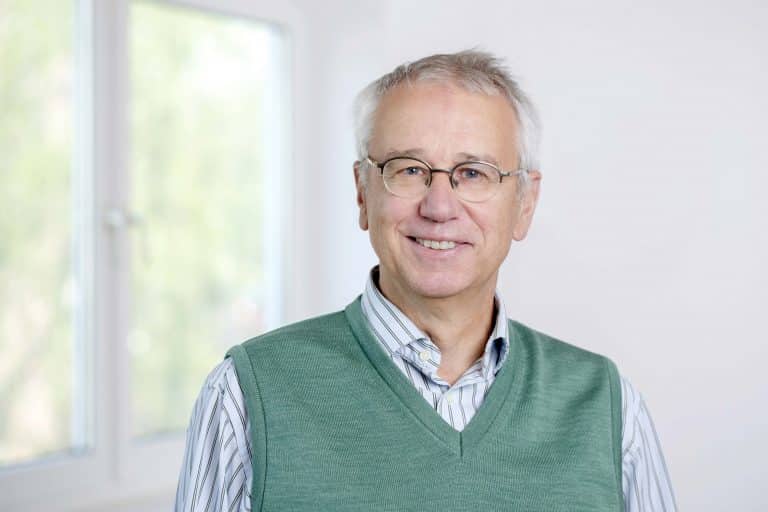
Apart from nuts, tropical fruits and rice, the partnership with the REWE Group..
Dieter Overath: …a long-standing and very good combination. When REWE became the first nationwide retailer to include Fairtrade coffee in its range in 1993, it opened the door for us. From then on, other retailers also began to take an interest in our products. What a lot of gossip I had previously received in discussions with buyers! Back then, hardly anyone was interested in Sustainability.
Departments for Corporate Social Responsibility did not yet exist and no one believed that customers would voluntarily pay more for a pound of coffee in such an aggressively priced market. My discussions with managers today have a completely different quality than ten or 15 years ago. Back then, I was, to put it casually, a clown. Thank goodness those days are over.
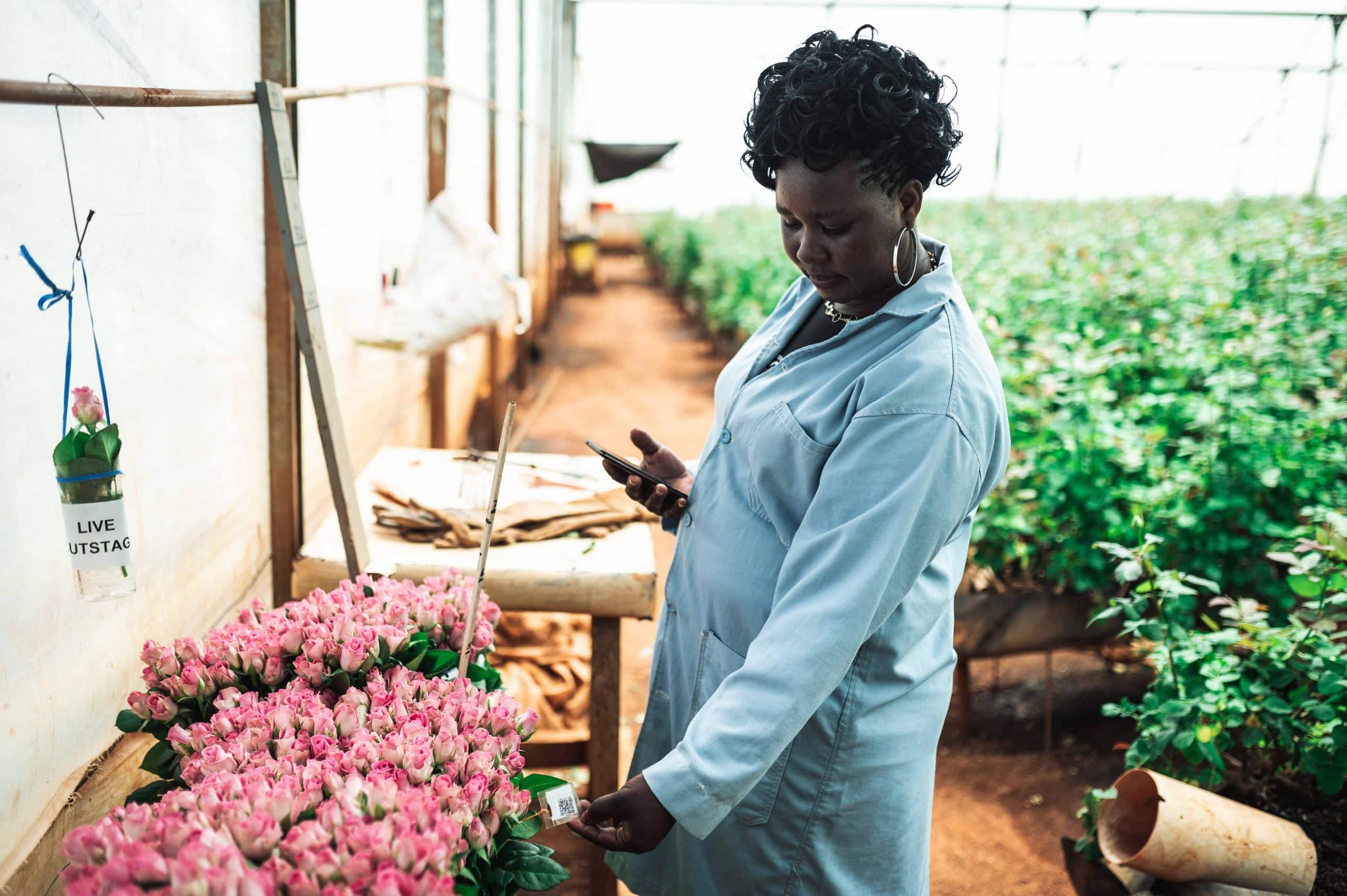
In 2007, REWE Group was the first food retailer in Germany to offer fairly traded cut roses from East Africa.
Fair trade coffee was soon followed by other goods at REWE: Tea, chocolate, confectionery and flowers.
Dieter Overath: I’m not saying this out of politeness, but because it’s true: when it came to new product categories, REWE Group was always at the forefront. Almost always, I have to say correctly. It has had to concede one stage victory to the competition.
And that was?
Dieter Overath: In 2007, it was all about the first Fairtrade own brand of a retail company. I was convinced that REWE would do it, but then Lidl came out on top in this case. Apparently, the step towards a Fairtrade own brand was still too complicated at the time.
In 2008, revenue from fair trade goods in Germany amounted to less than 50 million euros. Last year it was already more than two billion euros. An impressive development. Nevertheless, consumers spend an average of just 25 euros on fairly traded goods.
Dieter Overath: That’s why we can’t sit back and relax. We are pleased with our high reputation and the enormous awareness value of our seal, but we must continue to make an effort to open up new product categories and test price models that enable people in producer countries in the Global South to earn a living income.
In Ghana, REWE Group, together with Fairtrade and the German Federal Ministry for Economic Cooperation and Development, has launched a project in which cocoa farmers receive a supplement in the form of a so-called Living Income Differential in addition to the respective Fairtrade premiums and minimum prices. How successful is this model?
Dieter Overath: This is an important test balloon for us. In 2019, we raised the minimum price for cocoa and added the aforementioned surcharge. This brings us to the limit of what the market will just accept. We want to gather experience on how this limit can be moved upwards. Because it is obvious that something has to happen in the cocoa sector.
Young people in Ghana or the Ivory Coast have no desire to harvest cocoa for one dollar a day and see no future in the countryside. But old men, old trees, poor incomes – that’s a bad combination. On the other hand, producers and retailers need secure procurement.
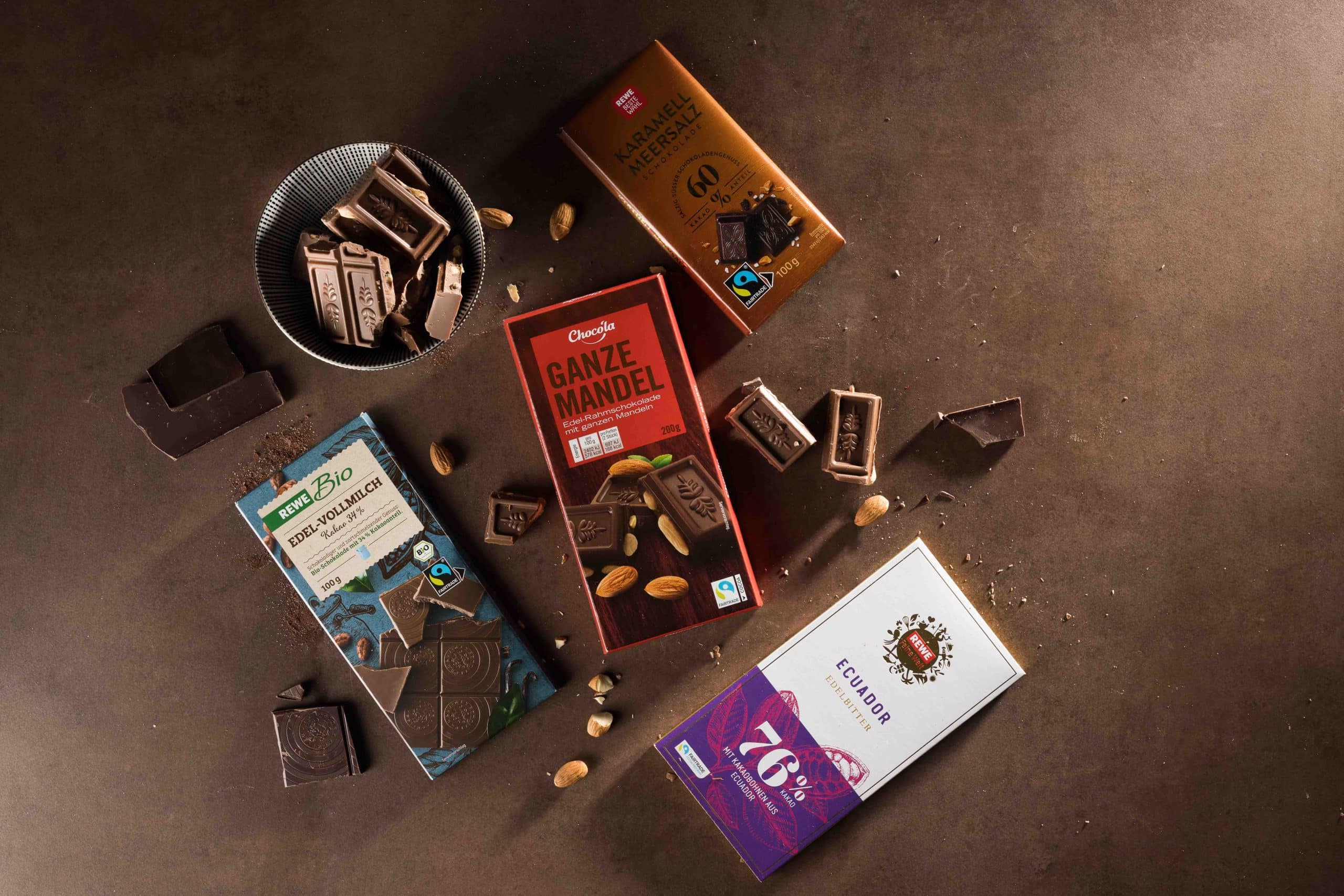
REWE Group was one of the first supporters of the Fairtrade cocoa program in 2014.
Alongside the organic label, the Fairtrade label is probably the best-known label in Germany. But there are more and more seals – from organizations, the state – keyword Green Button – or even from companies. The REWE Group, for example, has its own seal with Pro Planet. How do you see that? Unwelcome competition?
Dieter Overath: No. The fact is that many products are not even accessible for Fairtrade. We are not the solution to all sustainability problems. We focus on product categories that are very important for the Global South, such as cocoa for Ghana and the Ivory Coast or coffee for Peru. Other labels such as Pro Planet include other aspects in their assessment. This is good and increases credibility with consumers. Independent certification is the better solution. It can also make sense for a product to carry several seals, such as the roses from the REWE Group: Fairtrade as an independent external certification and Pro Planet.
The coronavirus pandemic is once again exposing the weaknesses and shortcomings in the producing countries. In the summer, it was reported that many harvests could not be harvested due to a lack of helpers and mobility restrictions making the transportation of goods to ports more difficult and expensive. Will there soon be gaps in the shelves?
Dieter Overath: No, the procurement situation has eased in recent weeks. I don’t see that there will be any supply bottlenecks. But the crisis is hitting small farmers and workers hard, because there are no aid packages like the ones being put together in Germany. This is why Fairtrade has changed its standards. Certified companies can use up to 100 percent of the Fairtrade premium money to compensate for wage losses for workers. We have also set up a relief fund. Producers can use this money to finance the purchase of protective equipment or the implementation of hygiene campaigns. This support has helped many companies a great deal.
Could a supply chain law help – i.e. a provision that makes respect for environmental protection, human rights and occupational safety mandatory for companies that manufacture in the Global South?
Dieter Overath: very much hope that this will happen and that the issue will not be put on the back burner again because the fight against the coronavirus pandemic is tying up capacities. I see the big challenge with the Supply Chain Act as creating transparency.
The law is intended to ensure due diligence, but the prerequisite for this is to create transparency. Who are the players and who has what role? That needs to be clarified. I expect tough discussions on the difficult issue of liability, especially for textiles that are transported halfway around the world in many stages. In the end, however, it will not be possible to prevent abuses such as child labor if parents earn so little that they have to make their children work as harvest workers instead of sending them to school. So in the end it is again a question of price. You can’t impose all kinds of standards on farms but not pay them a penny more. Unfortunately, neither living wages nor a minimum price component are part of the discussions on the Supply Chain Act.
Consumers, it seems, are increasing the pressure. They are increasingly asking questions about the origin of goods. Digitalization is also making it easier to trace supply chains.
Dieter Overath: Yes, things are changing. Young people in particular increasingly have a different view of the world and Sustainability is becoming more important to them. And most companies are now taking the issue very seriously.
You were born in 1954 and have said that you don’t want to tie your retirement to achieving goals. Nevertheless, is there a project that you would still like to tackle with REWE Group?
Dieter Overath: I think it would be good if we developed a fair alternative to paper bags, for example cotton bags made from fair cotton or outer packaging made from banana leaves. By phasing out plastic bags, the REWE Group has shown that it has the courage to make strong decisions. Perhaps we can do this together. I’m optimistic, not least because we’ll almost be neighbors in Cologne Braunsfeld after our move next year.
For almost 30 years: Strong partnership for fair trade
Fair trade products? At the beginning of the 1990s, they were only available in world stores, not in supermarkets. An initiative with the unwieldy name “Arbeitsgemeinschaft Kleinbauernkaffee” wanted to change that. The first and only permanent employee was Dieter Overath in 1992. The working group was backed by respected organizations such as Misereor and Bread for the World.
Their idea: to help improve the living and working conditions of producers in the global South through fair trade in Retail Germany. We didn’t want to be the 100th organization working for justice in the world, we wanted to offer an economic alternative,
Overath recalls. His mission was difficult. He promoted a concept in which space was to be created on the already full supermarket shelves for products that were more expensive than the established goods. Back then, buyers and coffee roasters couldn’t imagine such a thing.
We at REWE Group thought fair trade was a good idea very early on. We were the first nationwide retailer to add Fairtrade coffee to our range in 1993. This decision was a milestone for the former AG Kleinbauernkaffee. Thanks to REWE’s strong market position, it could hope for significantly higher sales volumes in one fell swoop. At least as important was the fact that it now had a renowned reference partner in the retail sector. Then it was like a game of dominoes – gradually more and more retail chains became involved with Fairtrade,
explains Overath.
Roses are the big hit
Fairtrade coffee was followed by tea, chocolate and other confectionery with the Fairtrade seal at REWE. In 2007, we were the first food retailer in Germany to offer fairly traded cut roses from East Africa in REWE and PENNY stores. This proved that Fairtrade doesn’t just work in a niche market,
emphasizes Overath.
Everyone who buys the famous 10-bunch bouquet of roses is buying a Fairtrade product. Some people may not realize it until they get home.
Incidentally, roses are the product for which the seal currently has the highest market share: around 30 percent of roses sold in Germany are Fairtrade flowers. In contrast, only five percent of coffee is Fairtrade, despite significant volume increases in recent years.
In 2016, we expanded our range of fairly traded goods to include Fairtrade poinsettias. We also gradually expanded the range of our own-brand products with Fairtrade ingredients. For example, we were one of the first to support the Fairtrade cocoa program launched in 2014. Since then, companies have been able to purchase Fairtrade cocoa or sugar as individual raw materials and use them for overall production in addition to traditional chocolate products with the Fairtrade seal. This further option opens up additional income for smallholder farmers.
In 2018, we at REWE Group – again as the first in the German food retail sector – began converting our entire own-brand chocolate range in the more than 5,500 REWE and PENNY stores to the Fairtrade cocoa program. In addition to chocolate bars and chocolate bars, this includes pralines, Easter and Christmas confectionery, instant cocoa and nut nougat spreads.
Helping people to help themselves
By the end of 2020, we want to convert all of our own coffee brands to 100% certified coffee, including Fairtrade certification in addition to Rainforest Alliance, UTZ or organic. Our partnership with the Peruvian Fairtrade cooperative Valle des Incahuasi is particularly important in this regard. The cooperative’s 360 farmers produce REWE Feine Welt coffee, which is both Fairtrade and organic certified.
With the “Incahuasi+” project, Fairtrade and we started to take our collaboration with the cooperative to a new level at the end of 2018. We are helping the coffee farmers to further increase the productivity of their plantations – for example, by supporting training courses that show them how to ward off coffee diseases and pests.
Last year, we launched a project together with Fairtrade that aims to strengthen the economic situation of smallholder orange producers in Brazil in particular. The focus is on the people who harvest the juicy oranges: Farmers, harvest workers, senior managers and technical advisors. They receive help to help themselves. In training programs, they learn good agricultural practices and how integrated pest management works.
The special thing about the orange juice from this project is that its supply chain is separate from the flow of conventional orange juices. This prevents conventional and Fairtrade-certified juice from being mixed. Customers can be sure that only oranges from Fairtrade-certified smallholder cooperatives have been used for production.
Premium for cocoa farmers
From spring 2021, we will be selling various types of Fairtrade chocolate bars with a fully traceable supply chain at REWE and PENNY. The cocoa is supplied by the Fanteakwa cooperative in Ghana. The special feature: In addition to minimum prices and Fairtrade premiums, the farmers receive a supplement in the form of a so-called Living Income Differential.
In addition, the project includes training courses implemented by the Initiative for Sustainable Agricultural Supply Chains and local partners. All measures are intended to help improve the economic independence of the farmers in the cooperative within a few years and enable them to earn a living income.
REWE Group has been committed to improving living and working conditions in growing countries for years in order to strengthen the economic situation of smallholder producers in particular. It is important to us to make a lasting contribution to improving local living conditions and to conserve natural resources. The cooperation with Fairtrade enables us to purchase raw materials from responsible, fair and sustainable production as well as transparent certification of our products,
emphasizes Hans-Jürgen Moog, Divisional Director of REWE Group.