The beans for the REWE Bio Caffè Crema pods are grown exclusively by women from the Fairtrade-certified cooperative “Valle de Ubiriki” in the “Café Mujer” project. Laura Meissner, Project Manager Sustainability Goods, and Thomas Stroeks, Senior Buyer Coffee, explain in an interview what makes “women’s coffee” from Peru so special.
Pure womens thing: REWE strengthens women in coffeegrowing
REWE Group is specifically committed to empowering women in its supply chains. A current project: women's coffee shop "Café Mujer" in Peru.
Reading time: 11 min.
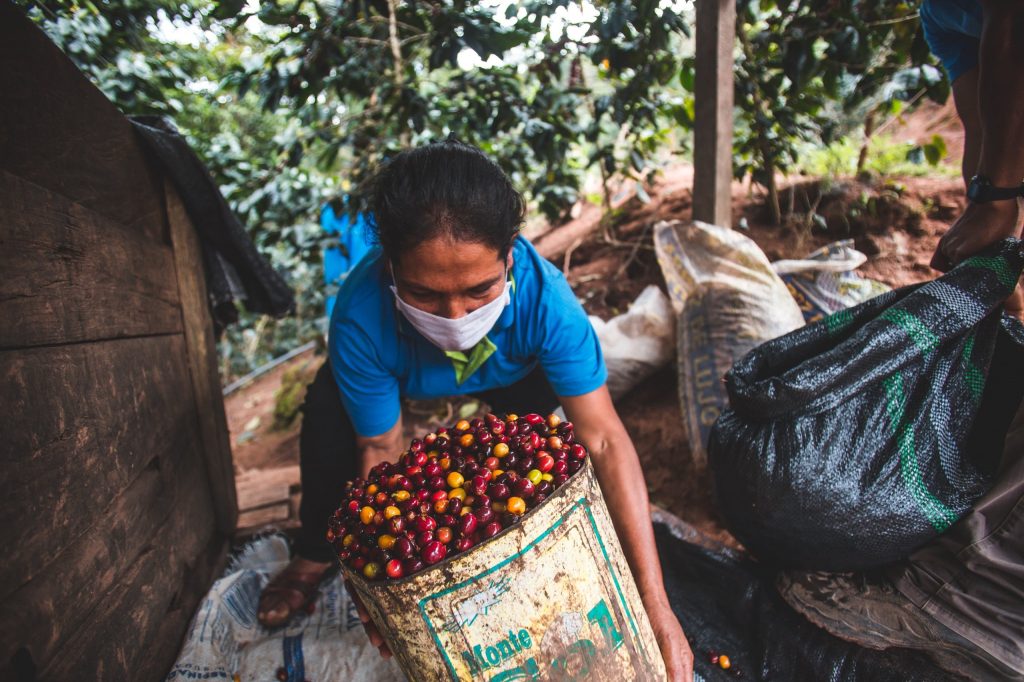
Hard physical labor, little to no income, sole responsibility for housework and childcare – women and girls in the Global South in particular are often disadvantaged and exposed to injustice. REWE’s “Café Mujer” women’s coffee aims to give female coffee farmers more economic participation and independence: With the REWE Organic Caffè Crema pods, REWE is offering coffee grown exclusively by women for the first time. The Arabica beans, Fairtrade-certified and organic, come from the Chanchamayo region in the heart of Peru, from coffee gardens that are cultivated and owned exclusively by women. The entire green coffee production is organized independently by the women farmers.
REWE guarantees the 120 women of the “Valle de Ubiriki” cooperative the complete purchase of their annual production at the Fairtrade minimum price. The cooperative also receives the Fairtrade premium for local projects. The REWE Bio Caffè Crema pods also bear the PRO PLANET label “For better social conditions”. They are now available in REWE stores throughout Germany.
Promoting economic participation
“Café Mujer” – which translates as “women’s coffee” – strengthens independent value creation and offers further training measures. As a result, the economic and legal position of the women involved in the project improves significantly. They gain greater monetary independence and social security, which also benefits their families. The cooperation with REWE is designed for the long term and should also motivate other women to join the cooperative project. The special feature: If the harvest quantities are larger than required for the REWE organic pods, the surplus beans are processed into other coffee products from REWE store brands. In this way, REWE creates great growth prospects for those involved in the project.
Holistic approach
The “Café Mujer”” project takes a holistic approach to supporting women. In the spirit of Sustainability, facilities for the production of organic fertilizers are built and native trees are planted in the coffee gardens of the women farmers. The latter has significant advantages: The shade effect inhibits weed growth, increases soil fertility, maintains biodiversity on the land and the yields from the trees create further sources of income. Fairtrade employees also organize a variety of workshops, for example on the post-harvest treatment of coffee beans and other operational practices, as well as promoting the women farmers in a wide range of skills such as team leadership, self-confidence and communication. The direct connection to the Ubiriki cooperative enables the women to access the existing infrastructure at low cost.
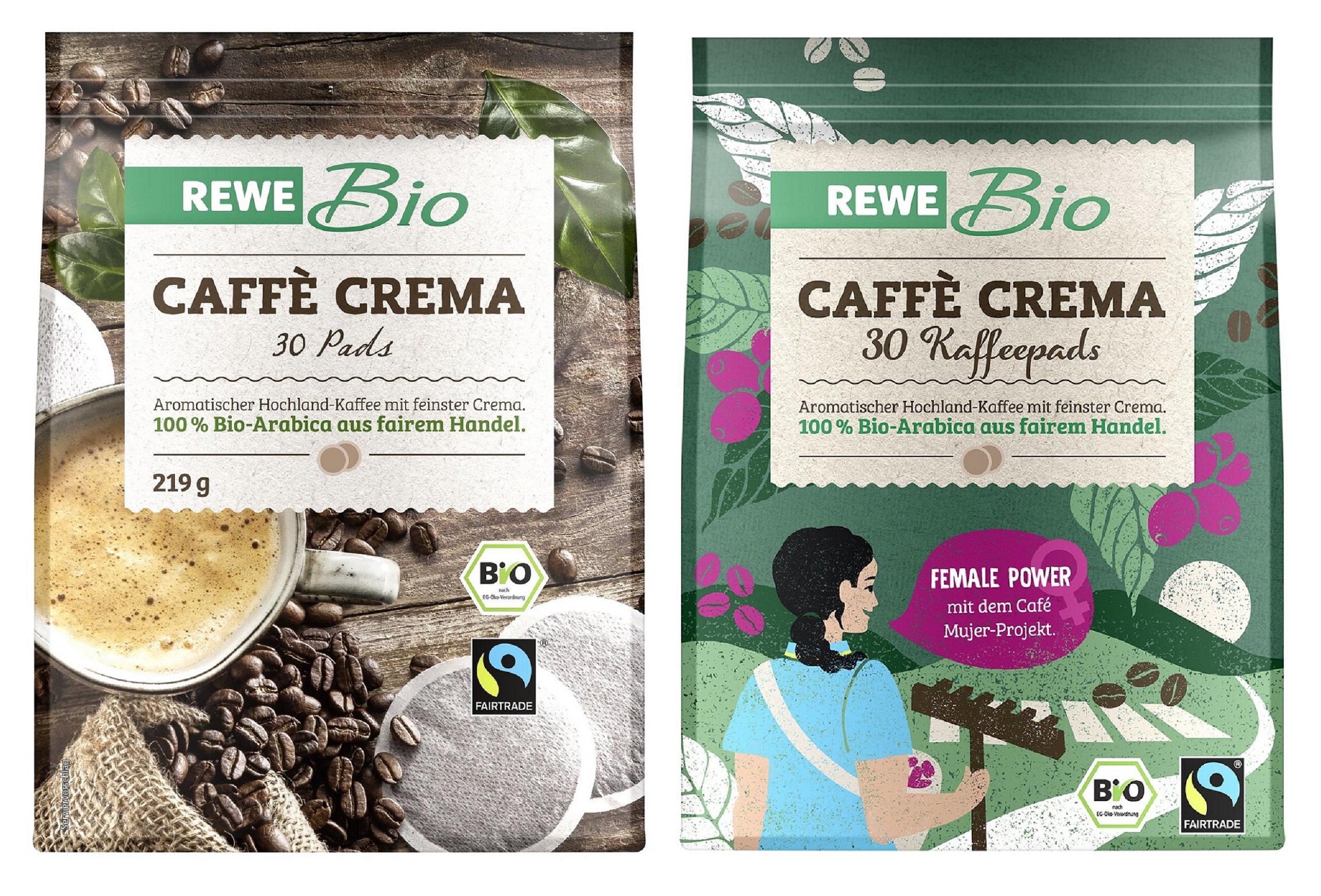
From old to new: the new packaging design (right) allows customers to recognize Frauenkaffee at a glance. The old design (left) will disappear from the shelves.
“This gives women a perspective”
What is REWE GROUP doing to anchor equal rights for women in its supply chains? What measures are being implemented in the “Café Mujer” project and what prospects does it give the women coffee farmers involved? Laura Meissner, Project Manager Sustainability Goods, and Thomas Stroeks, Senior Buyer Coffee, in an interview.
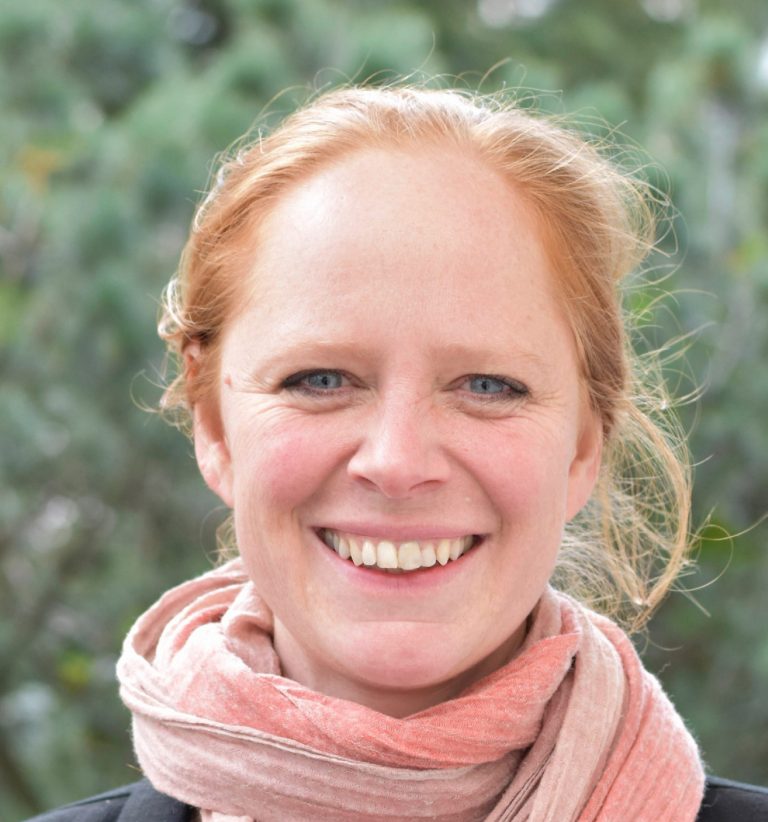
About:
Laura Meissner
is Project Manager Sustainability Goods at REWE GROUP

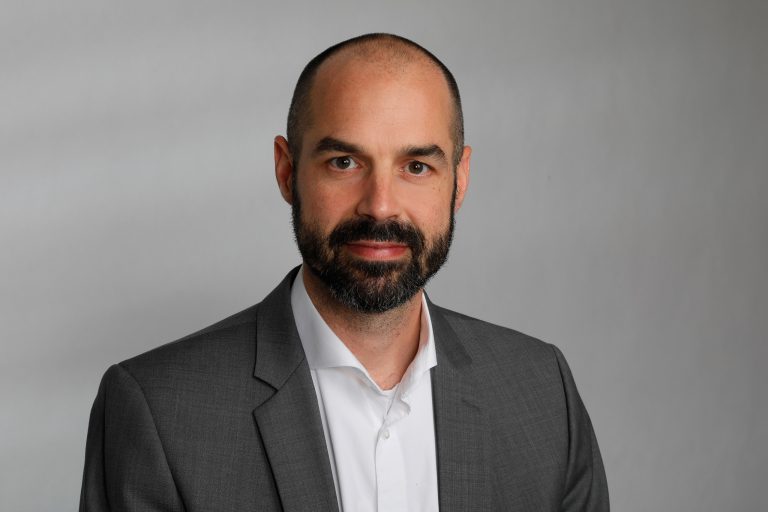
About:
Thomas Stroeks
is Senior Buyer Coffee at REWE GROUP
Women and girls in particular are often disadvantaged in terms of their legal rights in global commodity supply chains – restrictions on land ownership or limited access to wage labor or education and training are just a few examples. What is REWE GROUP doing to counteract these abuses in its supply chains?
Laura Meissner: As a first step, REWE GROUP carried out a risk analysis in 2020 to determine which negative human rights impacts women are particularly frequently exposed to and in which areas and countries the risks are particularly high for us. In the same year, REWE GROUP joined the UN initiative “Women’s Empowerment Principles” – this is our commitment to the targeted empowerment of women in the company and in society. We also encourage our suppliers to commit to the seven principles – which include, for example, equal pay for work of equal value, gender-specific measures to promote women and zero tolerance of sexual harassment in the workplace.
In order to promote the legal rights of women and their ability to participate economically and be independent, we then set out specific goals and measures in our guideline “Women on the supply chain”. In the guideline, we have also established regular dialogue with standard organizations, such as Fairtrade, and other stakeholders. We have established a “Factory Improvement Program” at factory level. An important component is that we ensure that training content addresses the specific needs of and risks for women in the factories. Our goal as REWE GROUP is to train all strategically important production facilities in high-risk countries. And in cultivation, we want to carry out individual projects to promote women where appropriate and possible, such as the “Café Mujer” project with the Ubiriki cooperative in Peru.
An important component is that we ensure that training content addresses the specific needs of and risks to women in the factories.
The urban-rural divide in Peru is very pronounced: rural regions benefit little or not at all from the general economic upturn. The poverty rate in these areas is almost 60 percent – a high proportion of which are women. Where does the “Café Mujer” project – women’s coffee – come in and what makes the coffee special?
Thomas Stroeks: The Arabica beans of the women’s coffee are Fairtrade and organic certified and are grown and harvested in the Chanchamayo region of Peru. What makes it special: The coffee gardens are cultivated exclusively by women from the “Valle de Ubiriki” cooperative. REWE also guarantees that the 120 women will buy their entire annual production. This purchase guarantee gives the women planning security and an economic perspective.
This purchase guarantee gives the women planning security and an economic perspective.
What specific measures are being implemented in the project in Valle Ubiriki?
Laura Meissner: The “Café Mujer” project takes a holistic approach to supporting female coffee farmers. In addition to economic empowerment, the project also promotes practical things, such as sustainable cultivation practices: By planting shade trees in the coffee gardens, the young coffee seedlings are naturally protected from too much sun. An additional positive effect: the indigenous tree species promote biodiversity in the region. In addition, organic fertilizer production facilities are being built to avoid the use of chemical fertilizers. The project is rounded off by a variety of workshops, for example on post-harvest treatment of the coffee beans or promoting leadership skills, self-confidence and communication.
Thomas Stroeks: The special thing about the measures presented by Laura is that we discussed the necessary support directly with the women of the cooperative in a workshop. This ensured that the money we invested was put to the best possible use, namely where it was needed by the coffee farmers.
How do we as REWE GROUP ensure that the measures achieve the desired success and that women are empowered in the long term?
Laura Meissner: We have drawn up a detailed project plan with various measures and objectives for the cooperative. For this purpose, a coordinator was hired locally to accompany the project and ensure that all agreed measures are implemented and benefit the women. In order to stay in touch with the project, we also make regular phone calls to the cooperative.
Has the coronavirus pandemic had an impact on the project or the availability of coffee?
Laura Meissner: Fortunately, the pandemic had no impact on the availability of coffee beans – unlike cocoa from “Very Fair”-Schokoladen, for example. However, the project naturally had to comply with stricter hygiene conditions during the harvest in order to protect the women farmers. We must now continue to monitor how the situation develops and how we can then organize the planned workshops in the project.
Give us an outlook: Will it stay with women’s coffee for REWE organic coffee pods or are similar projects for the advancement of women also planned for other REWE GROUP product ranges?
Thomas Stroeks: As a first step in this project, we want to empower women to further increase productivity and thus further strengthen their economic situation. Of course, we hope that in a next step we will perhaps also be able to offer other products whose raw material production is backed by projects for the targeted promotion of women.
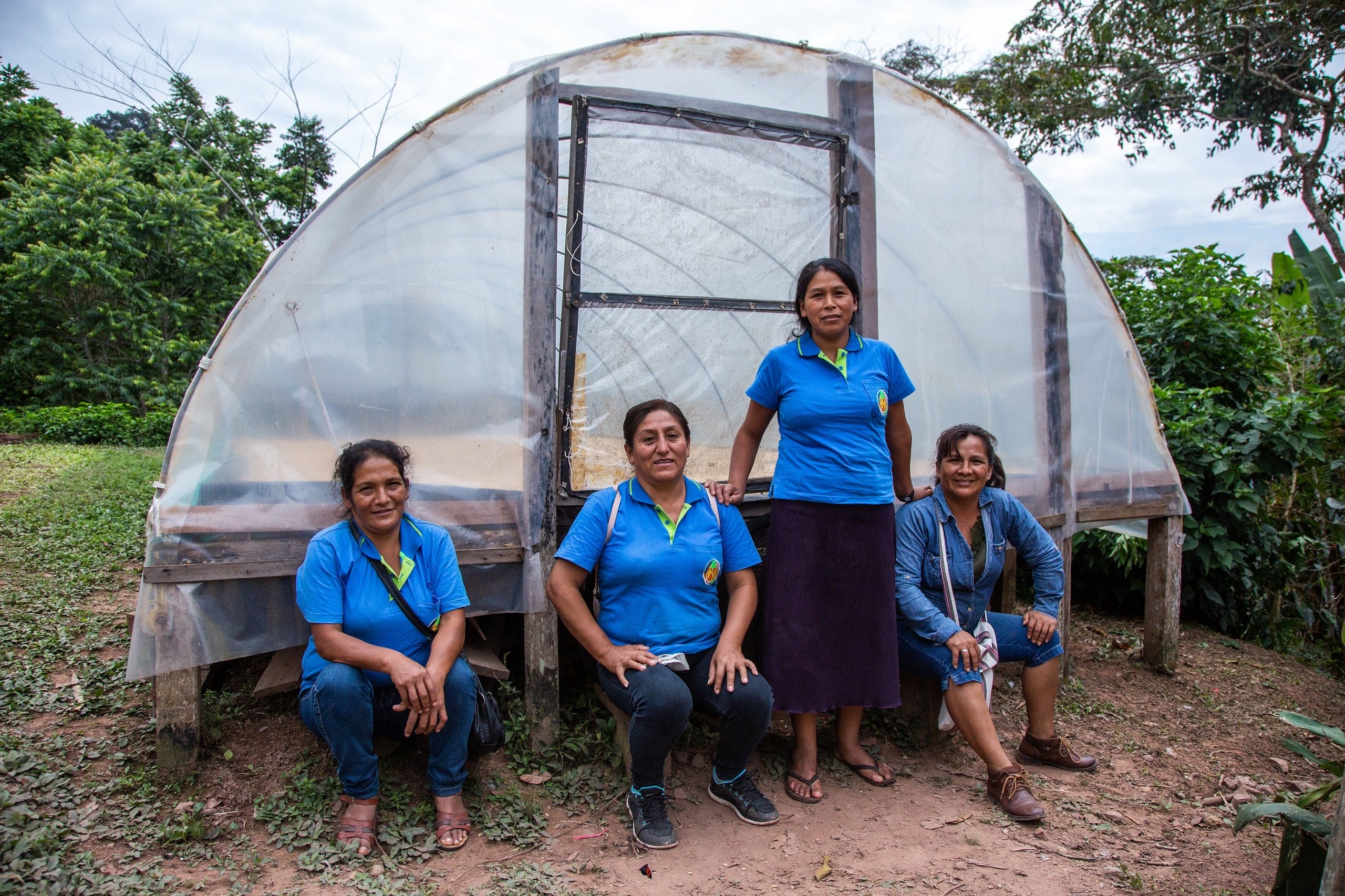
In addition to know-how on cultivation and harvesting, the women farmers also receive workshops on post-harvest handling of the coffee beans as well as training in a wide range of skills such as team leadership, self-confidence and communication.
Voices of women from the project
The ‘Café Mujer’ project encourages us to take care of our forest, our soil and our coffee cultivation. Even if there is sometimes less money, the project teaches us to appreciate the resources we have on our farm and to include them in our agricultural production. It is a great help to be able to share experiences and now value all the by-products of coffee production such as waste water and coffee pulp. Instead of throwing them away, I will now use them as organic fertilizer.
Idónea Vasquez Alarcón
We face many challenges, but we are working hard for our land, with a lot of strength and love. The ‘Café Mujer’ project has only just begun, but we are very motivated to learn, share our experiences and find out more about the cultivation practices on other farms in order to find new solutions and at the same time protect the land on which we live.
Maria Aurelia Cardenas Cartolini
Many women farmers are not yet familiar with the different techniques of coffee cultivation. The training courses in the ‘Café Mujer’ project will motivate us to appreciate everything that grows and is available on our farm. If there are materials and raw materials that are difficult for us to access because of their price, we can substitute them and in this way add value to our coffee. The project is important for us. So far, the issues motivate me and I hope that you will continue to support us!
Ana Muril Caysahuana
Strengthening women’s rights
The REWE GROUP sources a large number of products from all over the world via supply chains. These include countries in which the state framework conditions for the protection of human rights are often inadequate and in which applicable labor and social standards are disregarded. Because of their gender, women and girls in these countries are often doubly disadvantaged and restricted in their legal rights. In order to counteract gender inequality in its supply chains and to enable women to participate economically and socially, REWE GROUP defines concrete goals and measures for the targeted promotion of women in its guideline “Women in the supply chain”.